Pyrolysis-derived carbon black is becoming a consequential material within circular manufacturing ecosystems. As end-of-life tires accumulate globally, thermochemical conversion technologies offer a pragmatic route to recovering high-value resources. The carbon-rich residue generated from a pyrolysis plant for sale is no longer regarded as a low-grade by-product but as a functional additive with substantial industrial relevance.
Reinforcement Additives in Polymer and Rubber Manufacturing
One of the foremost applications lies in polymer reinforcement. When processed through a tyre pyrolysis machine, carbon black attains a morphology suitable for tensile enhancement in elastomers. Its intrinsic micro-porosity and high surface area make it compatible with natural rubber, styrene-butadiene rubber, and various thermoplastic matrices. Manufacturers employ this recovered material to improve abrasion resistance, elongation stability, and flexural strength. Its performance parity with conventional furnace-grade carbon black is increasingly recognized, especially in sectors seeking lower embedded carbon content.

Conductive and Electrochemical Applications
The conductive attributes of pyrolysis-derived carbon black enable its integration into electrochemical systems. Fine particle dispersion facilitates electron mobility, making it suitable for electrode formulation in battery housings and supercapacitor architectures. In continuous waste tire pyrolysis plant operations, process refinement improves the graphitic structure of the carbon fraction, enhancing conductivity. This property allows downstream users to incorporate the material into antistatic components, cable sheathing, and specialized coatings that require dissipative performance.
Pigments, Inks, and Coating Formulations
The chromatic depth and stability of pyrolysis-derived carbon black make it an appropriate pigment for inks, toners, and surface coatings. Its light-absorbing capacity contributes to consistent color saturation. By optimizing post-treatment—such as milling, pelletizing, or acid activation—producers can achieve precise particle-size distributions. This allows the carbon material originating from a tyre oil plant to match the dispersion behavior required in printing technologies. Moreover, coatings incorporating this material often exhibit improved UV resistance and thermal endurance.
Asphalt Modification and Infrastructure Materials
Infrastructure sectors utilize pyrolysis-derived carbon black to enhance asphalt binders and composite construction materials. It improves viscoelastic properties, reduces thermal cracking, and increases rutting resistance in high-load environments. Road engineering firms value its compatibility with polymer-modified asphalt blends. The integration of this recovered carbon fraction also contributes to reduced reliance on virgin fillers, aligning with broader mandates for sustainable resource use.
Environmental and Filtration Media
Owing to its adsorptive capacity, pyrolysis-derived carbon black can serve in environmental filtration systems. The presence of functional groups and residual mineral content enables the capture of volatile organic compounds, heavy metals, and aqueous contaminants. When processed under controlled conditions in a modern pyrolysis plant for sale, the resulting material exhibits consistent sorption efficiency. This makes it suitable for activated carbon precursors, industrial exhaust filtration, and wastewater treatment media.
Advancing Circular Utilization
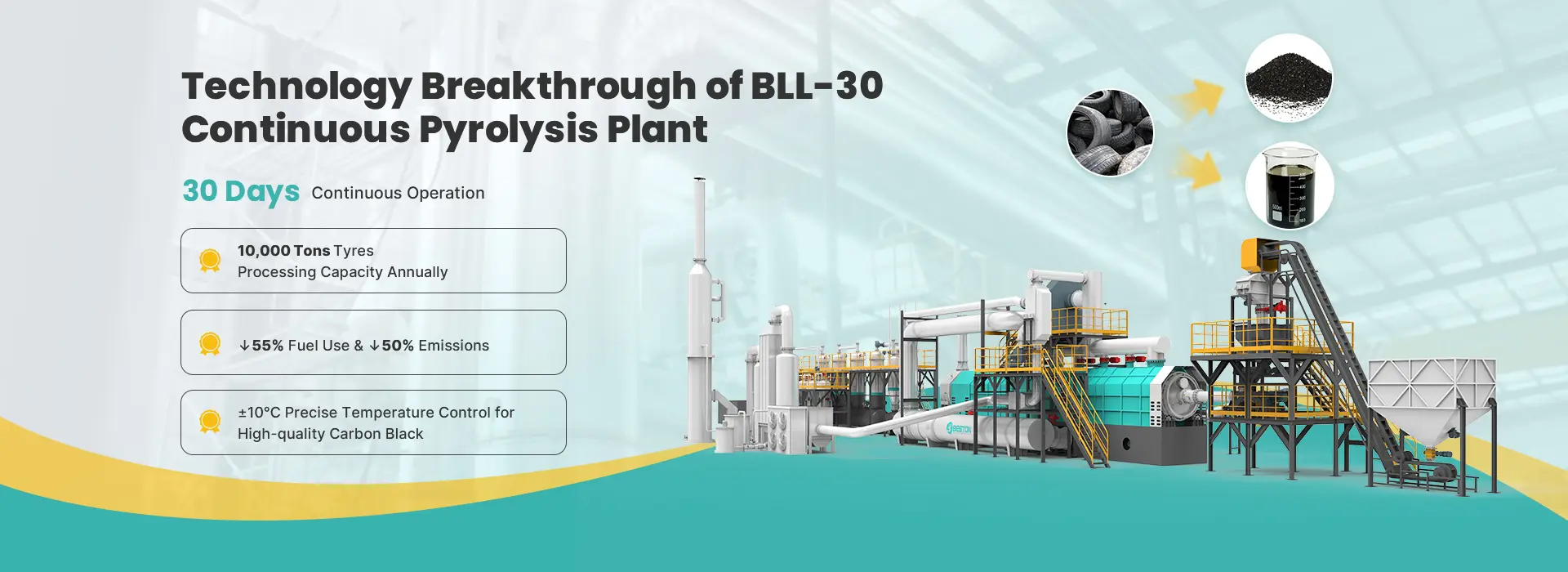
The expanding spectrum of applications underscores the strategic importance of pyrolysis-derived carbon black. As more industries adopt resource-efficient practices, the role of thermochemical recycling technologies gains prominence. Whether sourced from a tyre pyrolysis machine or a continuous waste tire pyrolysis plant, the recovered carbon stream demonstrates tangible industrial value. Its adaptability across mechanical reinforcement, energy storage, pigmentation, infrastructure, and environmental systems highlights its significance in advancing a circular, lower-impact materials economy.